A lot of people assume that a forecast directly triggers production or moves inventory. But that's not quite how it works and the difference matters a lot depending on which planning system you use.
Let's break it down in simple terms.
What Is a Forecast?
A Forecast is basically an educated guess about future demand. It's not a real order, and it's not a guarantee. It's a planning tool: a way to help the system prepare for what might happen.
How that guess is used, though, depends entirely on your planning method.
How MRP Uses Forecasts
In a traditional MRP system, forecasts are used to build a plan; and that plan is constantly being updated.
Here's how it works, step by step:
- The forecast starts as an estimate. Let's say you expect to sell 100 units this month. That's your starting forecast.
- Real orders "consume" the forecast. As actual sales orders come in, they replace part of the forecast. If you receive an order for 30 units, the remaining forecast drops to 70. Only orders within the same time period count.
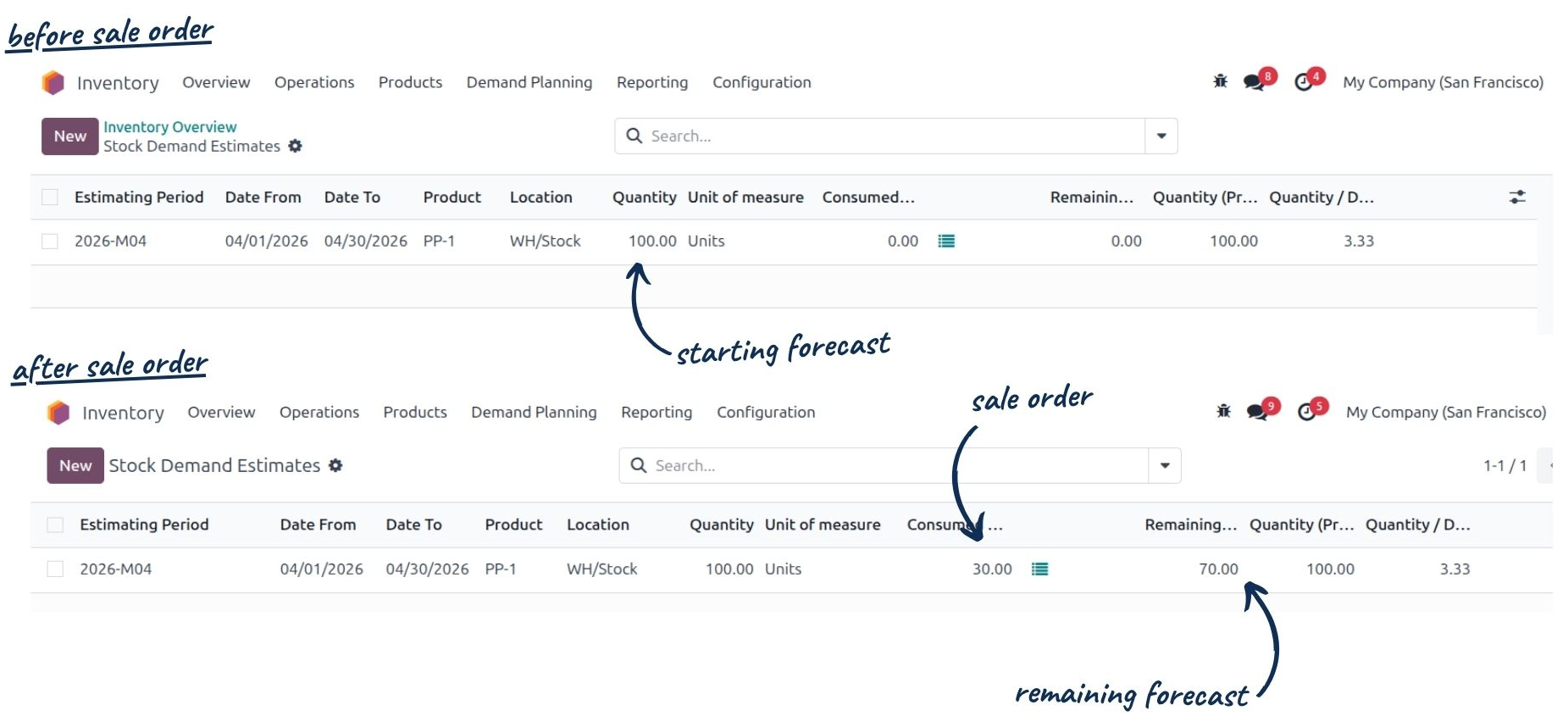
- The remaining forecast is spread across the rest of the period. The leftover forecast is divided by the remaining time, which could be days, weeks, or another interval depending on how your system is set up. This gives a planning quantity for that time bucket.
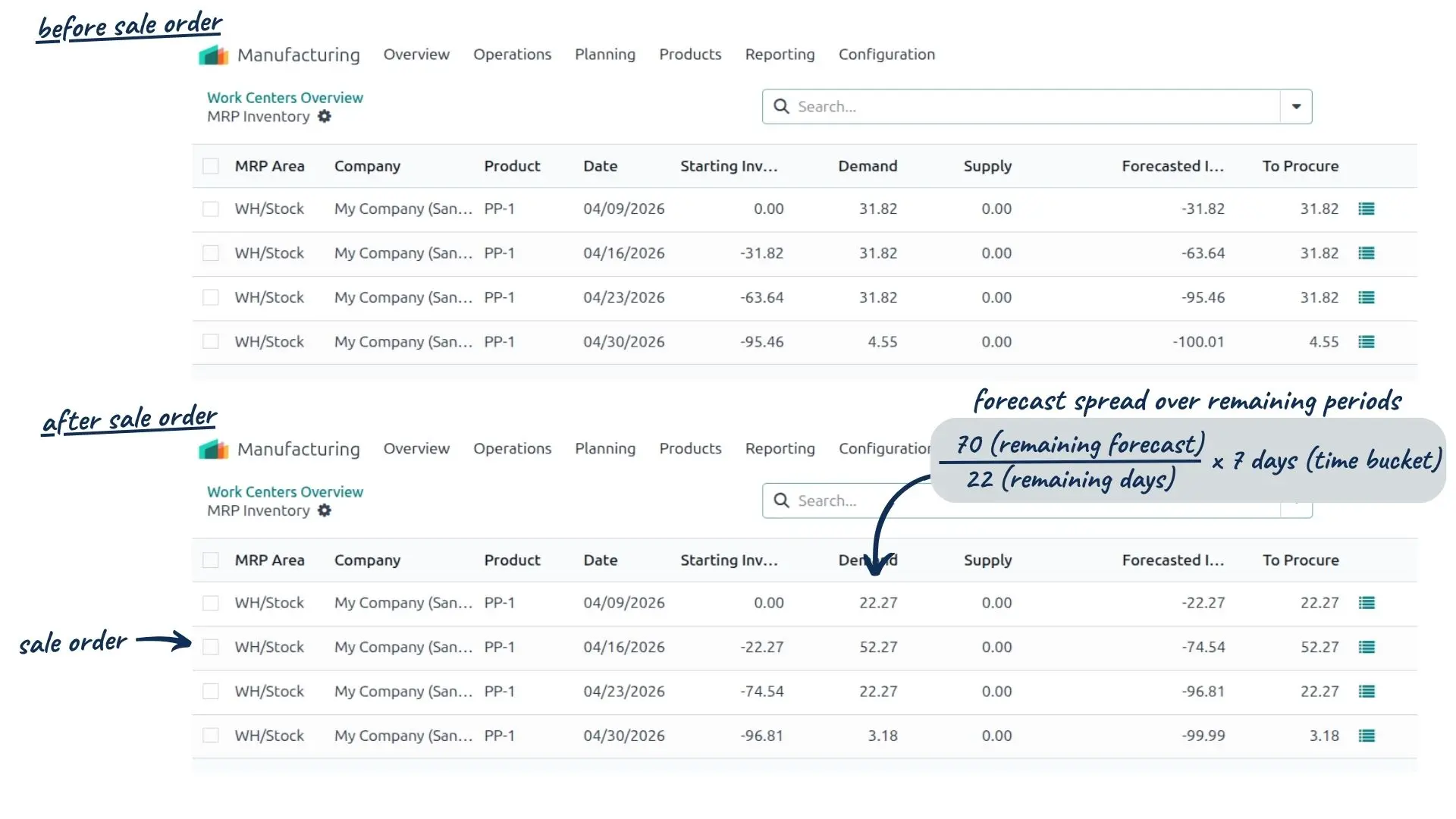
- That quantity drives procurement and production. MRP uses that demand to determine what needs to be purchased or produced and when.
- When the planning run is executed again, the system recalculates the plan based on the latest data. New order? Plan updates. Order canceled? Plan updates. This is why MRP can feel "nervous": it's always reacting.
The key idea: MRP plans based on projected demand (forecast + orders), not on real-time consumption signals.
How DDMRP Uses Forecasts
DDMRP takes a very different approach.
Instead of planning from forecasts, it plans from inventory buffers.
In DDMRP, forecasts are not used to trigger production or purchasing. Instead, they're used for one specific purpose: sizing stock buffers.
In DDMRP, what actually drives supply is real demand and the current status of your inventory buffers, not a forecast.
So where does the forecast come in?
It's used to calculate ADU: Average Daily Usage. Think of ADU as your best estimate of how much of a product you use, on average, each day.
ADU = Estimated Quantity ÷ Time Horizon
For example, if you expect to sell 300 units over the next 30 days, your ADU is 10 units per day.
ADU can come from historical data, future estimates, or a mix of both. Once you have it, it's used to size your inventory buffers.
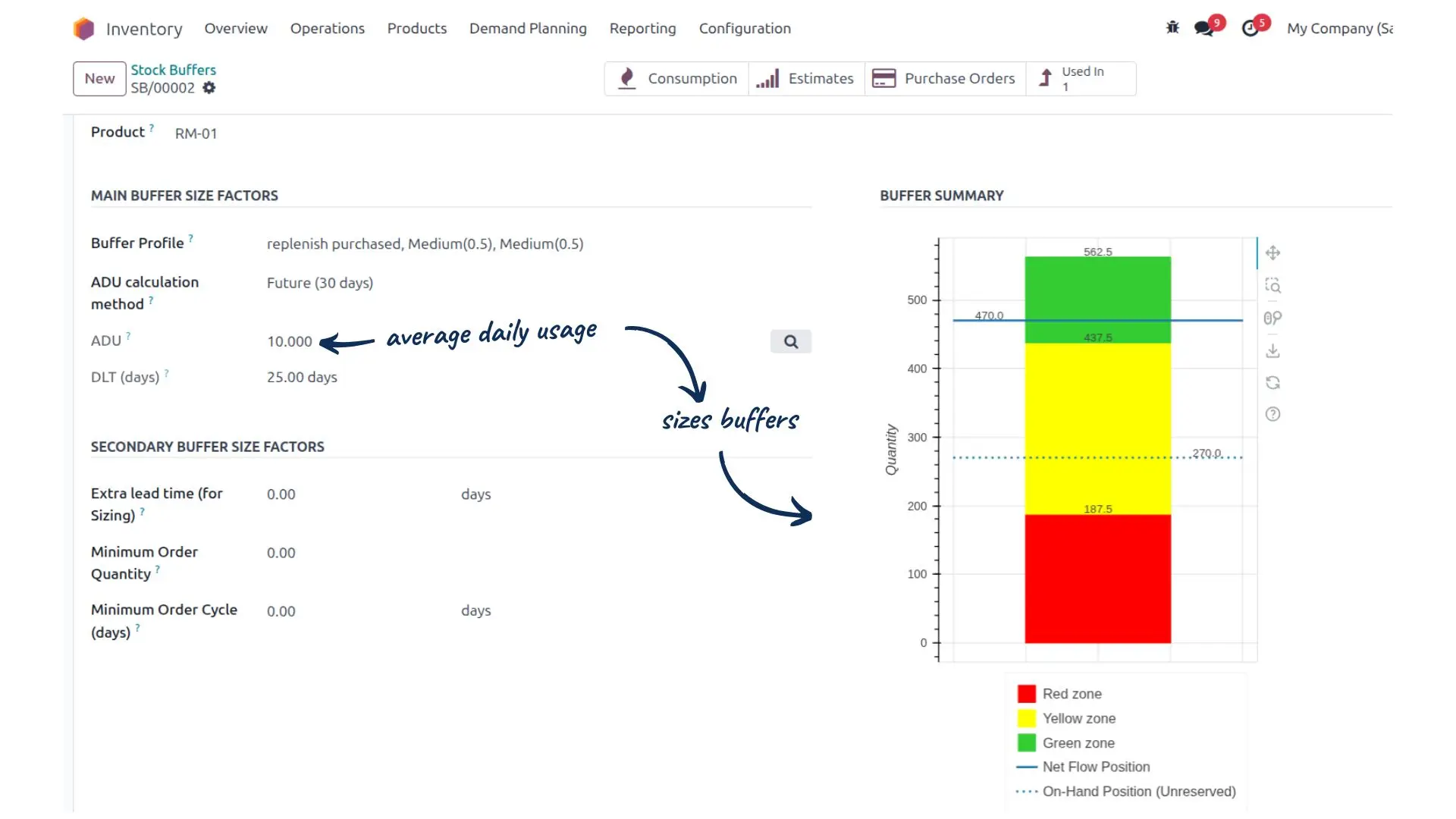
The Three Buffer Zones
DDMRP uses three buffer zones, all built around ADU:
🟢 Green Zone — Determines how often and how much you order.
This zone sets your replenishment rhythm. It's based on your order cycle, minimum order quantities, or lead time.
🟡 Yellow Zone — Coverage during replenishment.
This is the stock you rely on while you're waiting for a new order to arrive. Yellow Zone = ADU × Lead Time
🔴 Red Zone — Protection against surprises (safety stock).
This is your safety net for unexpected demand spikes or delays. The bigger the variability in your supply or demand, the larger this zone needs to be.
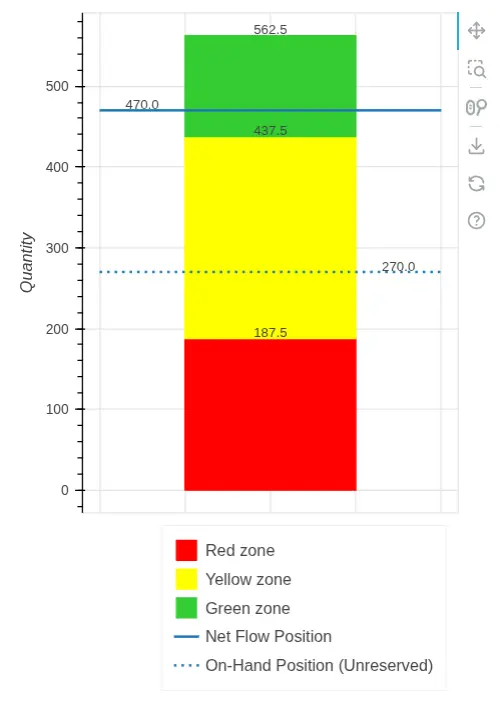
The key idea: In DDMRP, the forecast quietly works in the background to size your buffers. Execution --the day-to-day decisions-- is driven by real demand, not predictions.
Why Does This Difference Matter?
Mixing up these two roles is a common mistake and it leads to real problems:
- Too much inventory because the system over-plans based on forecasts
- Nervous, unstable plans that change constantly in MRP
- Poor service levels when buffers in DDMRP are sized with bad data
Understanding what your forecast is actually doing in your system is the first step to fixing these problems.
MRP | DDMRP | |
Forecast used to... | Drive procurement & production plans | Size inventory buffers |
Execution driven by... | Forecast consumption | Real demand + buffer status |
How it feels | Reactive, constantly recalculating | Stable, flow-driven |
MRP uses forecasts to build plans.
DDMRP uses forecasts to size protection.
Both approaches have their place: but only if you understand what role the forecast is playing.
At Forgeflow, we’ve spent years helping companies optimize their business processes, with a strong focus on supply chain and logistics. We work especially with manufacturing and distribution companies, where production, inventory, purchasing, logistics, and finance need to operate together in a reliable and well-structured way.
👉 If you’d like to learn more or discover which approach best fits your inventory management needs, get in touch with us.
We’ll be happy to help you make more stable, efficient, and business-aligned decisions.
Forecasting in MRP and DDMRP